
Updated: 10 November 2026
DieselWin Plinko is the calmest game in the Crash & Instant section, at least on the surface. You choose how many rows of pegs the ball will fall through and how risky the bottom row of multipliers should be, press drop, and watch. There is no cash out button and nothing to time. All of the decisions are made before the ball leaves the top of the board.
That makes Plinko easy to learn and easy to misjudge. This page gives the game card, explains rows and risk levels with a worked example in pounds, and shows why high risk swings so much harder than it looks on the board. Several Plinko versions can appear in the lobby, so the studio, RTP and stake range come from the info screen of the one you open.
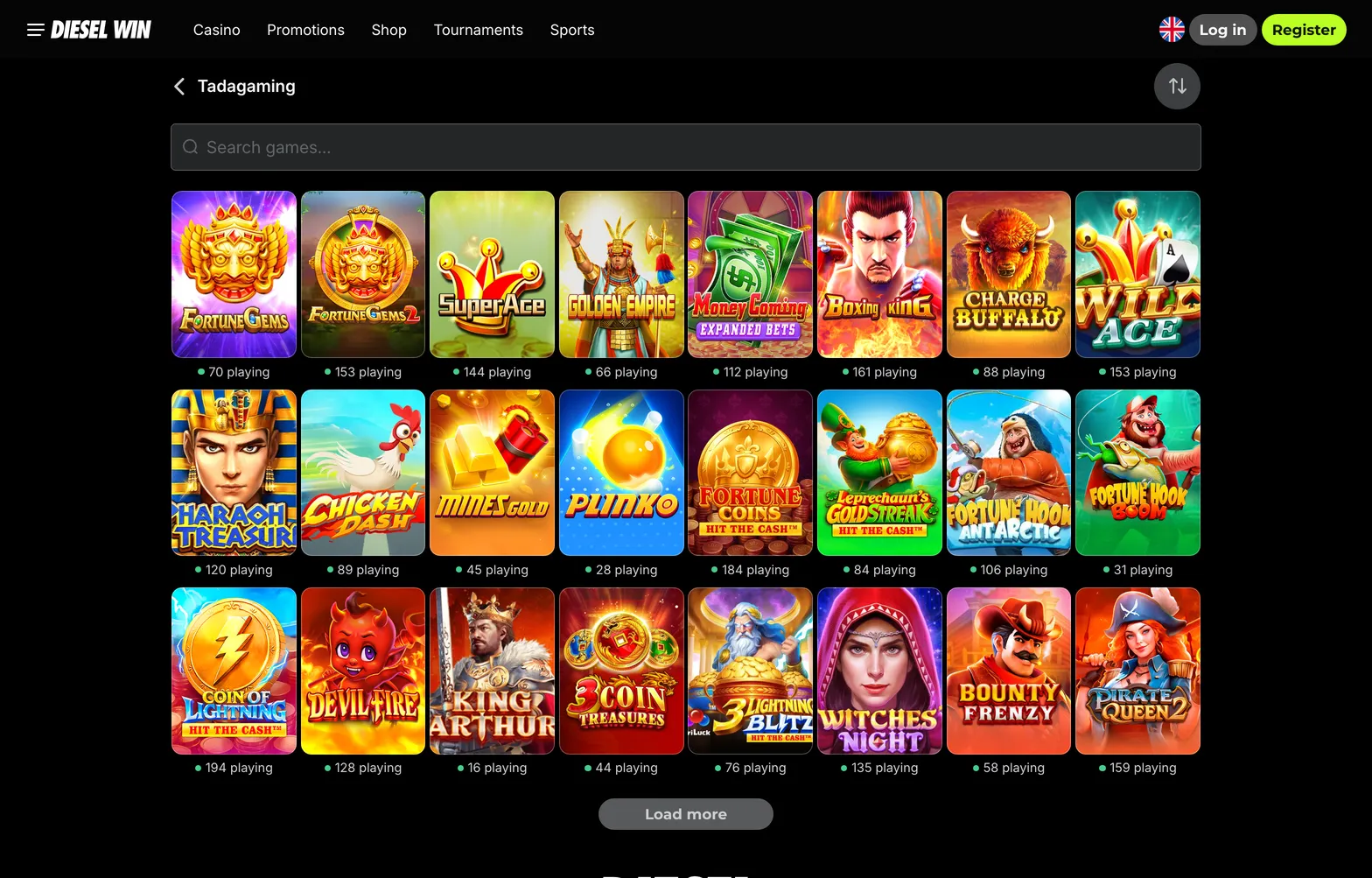
DieselWin Plinko game card
Our game card uses the same six fields on every game page. For Plinko, most values depend on the version and your own settings.
| Field | Plinko at DieselWin |
|---|---|
| Provider | See the game info screen (more than one Plinko version may be listed) |
| Type | Instant game, Crash & Instant section |
| RTP | See the game info screen |
| Volatility | Player-controlled: set by the risk level and number of rows |
| Stakes | See the game info screen |
| Key feature | Choice of rows and risk level; auto play in most versions |
| Demo | Check the lobby tile |
The board itself is a triangle of pegs. The ball bounces left or right at each peg, roughly at random, and lands in one of the slots at the bottom. The slots in the middle are reached most often and carry the smallest multipliers. The slots at the far edges are rare and carry the biggest. Every version prints its multipliers along the bottom, so you can see exactly what each landing pays before you drop.
That visibility is Plinko’s best feature. You never have to guess what a result is worth; you only have to accept how rarely the edge slots are hit.
The DieselWin Plinko game works well on a phone, and the auto play option lets you drop a set number of balls at a fixed stake. If you use it, choose a small number and watch the balance rather than leaving it to run.